
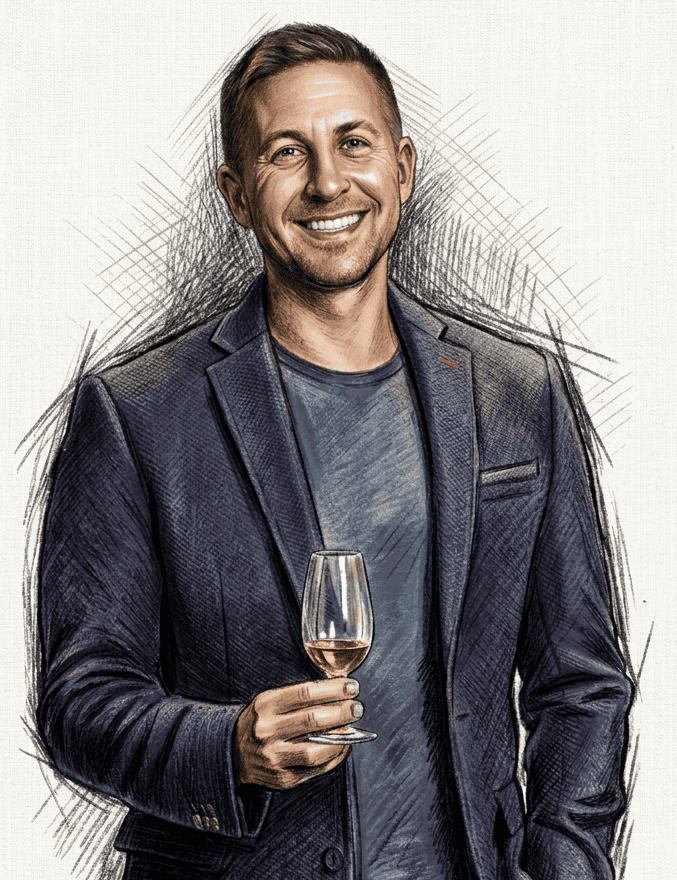
Some people build businesses. Others build communities. Over the past decade, Marc Pendlebury has quietly managed to do both.
As the founder of WhiskyBrother, Marc has helped transform what began as a specialist whisky retailer into one of South Africa’s most influential voices in whisky. Along the way there have been independent bottlings, whisky festivals, education programmes, exclusive casks, a whisky bar, and even a foothold in Scotland itself. Yet behind all of that sits the same philosophy that has guided WhiskyBrother from the beginning: whisky is ultimately about people.
Spend a little time talking with Marc and it quickly becomes clear that he doesn’t separate the commercial side of whisky from the community that surrounds it. Retail exists because people want to discover great whisky. Education matters because better-informed drinkers enjoy whisky more deeply. And friendships—whether with customers, distillers or independent bottlers—are often what make the industry’s biggest opportunities possible.
In this Fellowship Conversation we talk about everything from stealing sips of J&B out of his mother’s cupboard to the realities of running a whisky business during one of the industry’s toughest periods. We discuss changing palates, independent bottlers, modern whisky culture, and why — despite everything the industry has been through — the real job now is bringing new people to the table, not just chasing the next limited release.
So pour yourself a dram and join us.
The Person
Let’s start at the beginning. What’s the first whisky you can genuinely remember—not necessarily the best one, but the one that made you stop and think, “There’s something interesting here?”
That’s actually an easy one.
It was drinking J&B out of my mom’s liquor cupboard while she was out for the evening.
A few friends and I would help ourselves, and what’s funny is that some of those same friends are now my business partners at WhiskyBrother. Looking back, that’s really where the journey started.
Most of our mates would take one sip, pull a face and immediately reach for something sweeter—liqueurs, coolers, whatever else was available. But there were a handful of us who genuinely preferred the whisky, even though it was rough and fiery.
I think that’s when I first started thinking of myself as a whisky drinker.
It would still take another eight or ten years before that interest really shifted into second gear, but those early evenings planted the seed.
Would I drink J&B today for nostalgia? Maybe I should. I’m fortunate enough these days to be surrounded by some very good whisky, so it isn’t something I naturally reach for anymore—but it will always be part of where the journey began.
“I think that’s when I first started thinking of myself as a whisky drinker.”
Has your own palate changed over the years? Is there a style of whisky you dismissed early on that you’ve since fallen in love with—or one you’ve drifted away from?
Absolutely.
In fact, I’d say it’s one of the most reassuring things about whisky. If you’re new to it, it’s worth remembering that your palate isn’t fixed—it evolves.
Early on my exposure was fairly limited, so there wasn’t much that I actively disliked. Then, like many whisky drinkers, I discovered peat. Some people reject it immediately, but I was always fairly open-minded.
As my journey developed, I found myself becoming fascinated by different categories at different times. Mature grain whisky became a real area of interest for me, and I actively sought out older grain bottlings. Then there was bourbon, followed by rye. There always seemed to be another rabbit hole waiting to be explored.
Today it’s changed again.
I drink far less cask-strength whisky than I used to. That’s not because I’ve gone off it—I still love it—but my life is different now. I’m often working in the evenings, and two or three cask-strength drams don’t make for a particularly productive night afterwards.
These days I’m much more likely to add a little water too, something I hardly ever did years ago.
It’s not that I’ve turned my back on any style, just that preferences shift with the season of life you’re in.
If we opened your home whisky cabinet tonight, what would surprise us?
Probably the lack of new stuff.
I’m fortunate to do this for a living, so I have access to a lot of whisky and don’t feel the need to collect everything anymore — and honestly, it was never within my means to own everything anyway.
For the last four or five years that urge to chase everything new has faded. I’m always interested in trying new things, but I don’t rush to buy a bottle just because it’s available somewhere globally.
It doesn’t mean I’m not tasting these things, just that I’m not buying them. There’s simply too much whisky being released globally.
Ironically, I think that’s one of the challenges the industry finds itself facing today.
What’s one whisky opinion you hold that most enthusiasts would disagree with?
It depends what you mean by “enthusiast”, because that’s a very broad group of people.
For newer whisky drinkers, I’d probably say this:
Just because a brand is famous doesn’t automatically make it good.
Of course, the opposite is also true—it doesn’t automatically make it bad either. Big brands are often the first whiskies people encounter because they’re the most visible, and that’s perfectly natural.
But as your journey develops, it’s worth looking beyond the familiar names.
For more experienced enthusiasts, though, my perspective is slightly different.
One thing I think people sometimes forget is that whisky is still a business.
That’s not meant cynically. It’s simply reality.
As enthusiasts, it’s easy to focus only on the bottles and the excitement of new releases. From where I sit, though, I also see the people whose livelihoods depend on those bottles—the producers, importers, retailers and everyone working behind the scenes.
We often go to enormous lengths to bring interesting whiskies into South Africa, only for them to be dismissed almost instantly.
That’s perfectly fine—everyone should buy what they enjoy—but it does remind me that there’s another side to the story.
Dr Nick Morgan once summed it up beautifully when he said, “Whisky is a business.”
As someone who earns a living in the industry, that’s never very far from my mind.
“It’s easy to forget that whisky is a business.”
Outside of whisky, what hobby or interest has unexpectedly influenced the way you think about whisky?
Probably modern art.
I wouldn’t describe myself as an art expert by any means, but following the art world helped me realise something important.
Many of the things we see happening in whisky aren’t unique to whisky at all.
Luxury goods often follow remarkably similar patterns. Whether you’re talking about art, watches, handbags or classic cars, you see the same ideas around scarcity, collectability and limited editions.
It taught me to step back and recognise the bigger picture.
Sometimes you’ll see a brand promoting another “one-time-only limited release”, and because you’ve seen the same strategy play out elsewhere, you recognise the pattern immediately.
It doesn’t necessarily make it wrong—it simply makes it easier to understand why companies make those decisions.
Seeing whisky within that broader context has been genuinely insightful.
WhiskyBrother has arguably done more than any other retailer to build South Africa’s modern whisky community. Looking back, is there a moment when you realised you were no longer just selling whisky—you were helping shape the culture around it?
Thank you — that’s very kind, though I don’t know that I see it quite that way myself.
It’s been a hard slog, and we’ve been very fortunate to do what we do. This wasn’t accidental — it was intentional, difficult, and still is, but incredibly rewarding.
There have probably been a few moments rather than one. Taking the whisky show down to Cape Town was one — realising this extends past just where we physically are.
But the moment that actually strikes me most, oddly, was closing the WhiskyBrother bar in Morningside. That was heartbreaking — it wasn’t our choice, we’d poured our own collections into it, it survived two floods and made it through COVID, and we had regulars whose kids would come in just to say hi.
There was a real micro-community around that bar.
On the last night we had a full house, and when I got up to thank people I choked up — it felt like saying goodbye to a family member.
What struck me in that moment was people telling me about others they’d met and communities that had formed because of WhiskyBrother — that ripple effect, beyond just what we do directly, is probably what speaks to a tipping point.
Looking back now, it’s still surreal that we’ve done 110 WhiskyBrother exclusive casks and have an actual shop in the heart of Speyside in Scotland.
It’s good to take a step back every now and then and be reminded of how far it’s come.
Another thing that illustrates it well: there are plenty of WhiskyBrother fans who don’t know who I am, and that’s exactly as it should be — it speaks to my team and to the fact that this was never about one individual, it was always about the whisky and the community.
I love it when someone in the shop is raving to a customer about something and has no idea who I am, because what we’ve built should speak for itself.
The Business – WhiskyBrother
WhiskyBrother has changed dramatically since its early days, growing from a specialist retailer into one of the country’s best-known names in whisky. We asked Marc whether that expansion was always part of the plan—or whether it simply happened one opportunity at a time.
WhiskyBrother has become far more than an online retailer. Was that always the vision, or did the business evolve naturally into importing, festivals, tastings and education?
It evolved completely naturally.
When we opened the original WhiskyBrother store in Hyde Park, the goal wasn’t to build everything that exists today. We simply wanted to create a specialist whisky retailer and see whether there was room for it in South Africa.
As the retail side became established, the next opportunities presented themselves almost organically.
We’d been inspired by retailers like The Whisky Exchange and Master of Malt, and we’d become increasingly frustrated that so many interesting whiskies simply weren’t available locally. We wanted more independent bottlers, more single casks and more choice—not just for ourselves, but for South African whisky drinkers.
That naturally led us into importing.
The events happened in much the same way.
Customers would come into the shop asking whether they could taste something before buying it. At first those conversations happened informally, but eventually we realised there was genuine demand for organised tastings.
From there, the Whisky Show became the next logical step.
Unlike the UK, where there’s a whisky festival almost every weekend, South Africa still had room for another event that celebrated great whisky and brought enthusiasts together.
None of it was carefully mapped out.
Each new venture simply grew from listening to what the community wanted.
Some ideas worked better than others.
For a period we offered Edinburgh Whisky Academy qualifications in South Africa after becoming accredited providers. It was something we believed in, but there simply wasn’t enough demand to make it sustainable, so eventually we had to step away from it.
We’ve learned from the things that haven’t worked and kept doing the things that tick along and add to the ecosystem.
Looking back, what was the biggest turning point in WhiskyBrother’s journey?
There have been quite a few moments that stand out.
Launching our first WhiskyBrother exclusive single cask back in 2014 was a significant milestone. Opening the whisky bar changed the business again. The Whisky Show became something very special in its own right.
But if I had to choose one defining turning point, it would be expanding into Scotland.
Opening a WhiskyBrother business in Dufftown completely changed the way we thought about ourselves.
Suddenly we weren’t simply a South African retailer anymore.
We had a presence in the heart of Speyside.
People sometimes assume we deliberately chose Scotland’s biggest whisky destinations, but that was never the case. Edinburgh already has fantastic, well-established whisky retailers. We had no desire to compete with them.
Dufftown felt different.
It suited who we are.
Looking back, that move probably says more than anything else about how far WhiskyBrother has come.
If someone has never heard of WhiskyBrother before, what do you hope they notice first when they visit your website or store?
I hope they recognise the value we try to offer — through our selection, our pricing, our exclusives, and our professionalism.
We hold ourselves to a high standard and have had some international recognition, and we’ve always aimed to give South Africans a world-class experience — a phrase that gets thrown around too easily these days, but we try to earn it.
Ideally someone stumbles on our page and assumes it’s a cool UK retailer, then realises it’s South African and thinks “that’s pretty cool.”
Of course we can’t match the selection of a UK-based retailer — that’s just not practically possible — but outside of that, we hold ourselves to as high a standard as we can, aspiring to stand on the shoulders of the international retailers who inspired us in the first place.
Independent bottlers have become a big part of WhiskyBrother’s identity. Was introducing South Africans to those bottlings a commercial decision, a personal passion, or a bit of both?
It was never really a commercial decision beyond having faith we could sell what we brought in — it came from a scarcity in the market that we were looking to fill for ourselves.
We’re agnostic about what we personally like; it’s about trying to have everything available that we can.
For independent bottlers specifically, which were largely missing from South Africa, we tried to bring them in simply because we wanted to drink them and believed our community would too, based on years of running the shop, the bar, the shows and tastings.
There’s a dozen-plus indie bottlers we’ve been the first to bring into the country — they come and go because there isn’t always a large enough market to keep them here permanently, but there’s always something new to jump into.
The relationships behind those imports are equally important.
Many of the people behind these companies have become genuine friends.
People like Ian Croucher, David Stirk and Scott Lang weren’t just business contacts—we built friendships long before their whiskies ever arrived in South Africa.
A lot of it comes down to: we love these brands and their people, and want to support them, even if the volumes we can move will never be commercial-scale by big-market standards.
How do you decide which new brands or bottlings deserve a place on your shelves?
The first question is always whether we can actually get access to them.
That sounds obvious, but access isn’t guaranteed.
Some producers simply aren’t interested in exporting to smaller markets, while others have allocations that disappear long before they reach us.
Second, there needs to be genuine interest from us, usually because it’s a cool product from a smaller or independent producer, or someone we know.
The reality is there’s so much available globally now that we simply can’t bring it all in — it’s not commercially feasible, and there isn’t enough market here to support it.
We need confidence we can actually sell it.
On the other hand, when you find a producer making excellent whisky at a sensible price, those relationships often become long-term partnerships.
That’s exactly what’s happened with several of the newer distilleries we’ve introduced over the years.
You’ve built relationships with distilleries and suppliers around the world. Is there a partnership that you’re particularly proud of?
Signatory Vintage. I knew of them back in the day like anyone informed in the industry did, and it was available here and there in small allocations.
Our relationship goes all the way back to 2014, when I selected our very first WhiskyBrother exclusive cask.
At the time we were complete unknowns.
We were given an opportunity because the South African importer believed in us, and we travelled to Scotland to select that first cask.
Fast forward more than a decade and the relationship looks very different. We now have a direct one-on-one relationship with Signatory and have bottled ten WhiskyBrother exclusive Signatory casks plus their general releases.
That’s something I’m genuinely proud of.
Signatory isn’t the easiest company to work with — they have a bit of an anti-establishment, rough-feathers streak, which is honestly part of why we like them.
Managing a good relationship with them hasn’t been the easiest dynamic, so it feels like a real achievement.
Looking around the store today, is there one bottle that perfectly sums up what WhiskyBrother stands for, and why?
If I had to choose just one, it would probably be our Sinfonia Minor release.
It’s not a single malt (we know what’s in it, but it’s not something buyers generally clock), it’s about the liquid rather than flashy packaging.
It’s also a very personal project. I designed the label and wrote the copy — I went through around 300 iterations before it went to print, and every time I look at it I still want to tweak something.
That constant, pedantic pursuit of small improvements — never thinking we’ve “arrived” — feels like it captures WhiskyBrother well.
Sinfonia also represents good value, and the fact that we never set out to run our own bottling range, and now do it purely for our own community rather than to sell through others or export, sums up the ethos: quality and community over scale.
Festivals, tastings and education have become central to the business. Do you see yourselves as retailers who host events, or educators who happen to sell whisky?
We’ve always considered ourselves educators — it’s part of being a responsible member of the whisky community: staying humble enough to keep learning, while also feeling a responsibility to share knowledge and experience.
From a business perspective it’s genuinely blurred — some events are aimed at knowledgeable enthusiasts who may not even buy much from us, others are entry-level events aimed at bringing new people into whisky, which the business needs, but which the community needs even more.
One of the things that worries me most about the current industry downturn isn’t the sales dip, it’s not seeing enough young people entering whisky — the passion shouldn’t die with our generation; it’s always been about passing the torch, the way the old masters talk about being mere caretakers.
The more you understand what’s in the glass — how and where it was distilled, the techniques involved — the more your appreciation grows exponentially, and we all have a responsibility to pass that on, the way those before us generously gave us their time and their drams.
Part of our events philosophy has also been about closing the distance South Africa feels from the rest of the whisky world — bringing in international guests for tastings, getting producers to our whisky show, trying to reduce the isolation. It gives us camaraderie too — you can only do so much sitting alone with a bottle.
“We’ve always tried to bring South Africa closer to Scotland.”
The Industry
After talking about WhiskyBrother’s own journey, the conversation naturally turned to the wider whisky landscape—what’s changed, what’s exciting, and where Marc believes the future of whisky is heading.
What’s changed the most in the South African whisky scene over the past decade—and what hasn’t changed enough?
The biggest change has simply been the amount of whisky that’s available.
It’s easy to focus on the bottles we still can’t get, but sometimes it’s worth remembering how different things looked ten or fifteen years ago.
When we started WhiskyBrother, when we started, certain big names weren’t even here, and now there are half a dozen expressions plus a dozen limited releases of the same brand.
What hasn’t changed enough is the legislation around bottle sizes — 700ml bottles remain unavailable for distribution here, which is a travesty.
We’re one of the last markets holding onto this, rooted in decades-old profiteering rather than anything sensible today.
It doesn’t help brands like ours who mostly aren’t dealing in 40% commercial spirits anyway — it’s purely a barrier to entry, and it’s disappointing that after so long there’s been zero movement.
What’s one trend in whisky that you think is genuinely exciting, and one that you think is mostly hype?
Exciting: a fairly recent (maybe 12-month-old) trend of releasing whisky meant for drinking again, not just collecting and investing — honestly priced, made to be enjoyed.
I think the industry lost sight of this for a while, and it’s part of why we’re in the current downturn — a lot of it was self-inflicted through over-hyped limited editions and new distilleries, where bottles were being flipped at double the price before the liquid even hit a glass.
We got swept up in it too as enthusiasts initially, before realising how damaging it was — brands running ballots for “limited” editions that then sit discounted on shelves three years later.
It would be nice, though unlikely, if some of the big international brands took responsibility for the situation they created rather than just blaming market conditions while laying off staff.
The trend I’d like to see more of is whisky bought to actually be opened and shared, guilt-free — that’s what whisky should be about
Which part of the whisky world isn’t getting the attention it deserves right now?
Honestly, I think almost everything is over-spotlighted these days — any small move by a distillery gets picked up by a dozen publications.
If I flip the question, I’d say the industry itself isn’t paying enough attention to education.
If brands want to fix the current downturn, they need to be welcoming new drinkers rather than chasing whatever’s trendy — gin, RTDs, no-alcohol.
If you’re a whisky business, focus on your whisky.
There used to be far more brand ambassadors doing tastings and events; now some brands won’t do events unless they’re small and exclusive, which does nothing for the broader market that might actually drink their whisky day to day.
Diageo used to be a good example of proper education outreach — info booklets, newsletter sign-ups, physical mailers.
Now it’s just an overwhelming flood of newsletters from every producer, which isn’t the same thing at all.
From a consumer point of view, maybe the smaller, quieter producers just trying to make good whisky deserve more attention — but we’re living in an attention economy where visibility often has nothing to do with merit, and honestly we need less noise, not more.
What’s the biggest mistake you see people making when buying whisky?
It varies a lot across our customer base, and “mistake” is a strong word — we try to guide rather than judge.
There are still plenty of people who just want the big commercial brands, which is fine, but we try to offer alternatives, even just as a seed for next time.
There’s still a widespread assumption that price equals quality, which isn’t always true — there’s excellent whisky available at more accessible price points.
And there are people who buy so-called “limited editions” purely to collect them, when the honest advice is: buy it to drink it.
Is there a bottle, distillery or trend that everyone seems to chase, but you think people should stop obsessing over?
At various points over the years, yes, but right now I’d actually say there’s a general fatigue setting in, which isn’t a bad thing — people are more cautious with their spending.
If anything, Macallan is the modern equivalent of what Johnny Walker Blue used to represent a decade ago — the “impressive gift” bottle. The liquid’s perfectly good, but you’re paying a status premium; you can get equally good whisky for half the price.
I’m not saying people shouldn’t buy it if that’s what they want, but our job is to at least try to introduce alternatives.
On the flip side, what’s quietly sitting on shelves today that deserves far more attention than it’s getting?
From our own shelves right now: the Aberargie inaugural release — fairly priced, small production, independently family-owned, using local barley that doesn’t get championed enough, and the liquid itself is excellent.
Also our Duncan Taylor Holyrood exclusive — a hundred-bottle four-year-old sherry cask, the first time Holyrood has been available in South Africa from a great independently-owned distillery.
It’s sold slower than expected for only a hundred bottles, which I think speaks to general fatigue and the fact that it’s a relatively unknown name compared to distilleries that get hyped up well before their liquid is even available.
These are the “sleepers” — genuinely high quality, supporting independent producers, and worth people’s attention.
It comes back to education: people don’t know these distilleries, so why would they reach for the bottle?
Imagine someone walks into WhiskyBrother with R2,500 to spend. Would you rather help them buy one exceptional bottle or a couple completely different whisky experiences? Why?
It depends entirely on where they are in their journey.
If they’re young and new to whisky, don’t spend it all on one bottle — buy two to four different bottles across different styles and producers to explore.
If someone’s already tried almost everything, then it’s worth steering them toward one more special bottle they haven’t had access to, maybe a single cask.
We do this regularly — sometimes it’s a gift scenario and we’ll suggest two very good bottles instead of one expensive one.
It really comes down to the individual.
If you could make one change to the South African whisky industry tomorrow, what would it be?
700ml bottles, without a doubt.
Current restrictions mean international producers are hesitant to properly commit to building a brand here, because there’s real risk in betting on a market they can’t be sure of.
Meanwhile South Africans can — and do — freely order unlimited 700ml bottles directly from overseas retailers, so the restriction doesn’t even achieve its stated goal.
It mainly hurts South African retailers who are trying to build the local market, while ironically doing nothing to stop the one in five bottles of spirits in South Africa that studies show are counterfeit — so the “protecting against grey imports” justification doesn’t hold up.
It’s either laziness, ignorance, or intentional protection of the commercial brands’ stronghold — there’s no other explanation.
I’m an optimist though — I think it will change eventually; the only real question is how much damage happens before it does.
What conversation do you hope South African whisky lovers are having five years from now that they aren’t having today?
Honestly, I hope they’re having the same great conversations they’re having now — just with a lot more new people in the room.
There are plenty of established clubs and passionate diehards doing great things, but there’s a shared responsibility to pay it forward and bring newcomers in, the way we all got introduced by someone at some point.
Most of us didn’t discover whisky in isolation — it happened through people: the ones who made it, the ones we drank it with, the ones who introduced us.
I’d love it if, in five years, half the people having those conversations were new to the category — because a shared dram and a shared story is simply better than drinking alone.
“The passion shouldn’t die with us.”
Brilliant read. Thanks both of you.
Thanks Hardy! I feel that Marc and I could have a dozen more conversations like this, and never touch on the same subject twice.